Filecoin is a decentralized storage system that aims to “store humanity’s most important information.” The project raised $205 million in an initial coin offering (ICO) in 2017, and initially pl ...anned a launch date for mid-2019. However, the launch date for the Filecoin mainnet was pushed back until block 148,888, which is expected in mid-October 2020.
The project was first described back in 2014 as an incentive layer for the Interplanetary File System (IPFS), a peer-to-peer storage network where users pay for data storage and distribution services in $FIL. Filecoin is open protocol and backed by a blockchain that records commitments made by the network’s participants, with transactions made using FIL, the blockchain’s native currency. The blockchain is based on both proof-of-replication and proof-of-spacetime.
Filecoin is open-source and decentralized, which means that all governance is in the hands of the community. On the Filecoin platform, developers have the opportunity to create cloud file storage services like Dropbox or iCloud. Anyone can join Filecoin and start storing their data or earn money by providing space for someone else's funds. The creators of Filecoin opted for their blockchain technology to run the network and their token with their own consensus.
$FIL is the native currency of Filecoin that powers the entire network and all processes. Clients pay for transactions in FIL tokens. Miners place FIL as collateral, guaranteeing their services.
The developers claim that Filecoin solves the problem of inefficient file storage and retrieval. Customers can find the right solution with an efficient set of tools and its core development, IPFS.
Who Are the Founders of Filecoin?
Filecoin was founded by Juan Benet, who also created the Interplanetary File System. Benet is an American computer scientist who studied at Stanford University. After founding Protocol Labs in May 2014, he attended Y Combinator in the summer of 2014 with the intention of supporting both IPFS and Filecoin, as well as other projects.
What Makes Filecoin Unique?
Filecoin aims to store data in a decentralized manner. Unlike cloud storage companies like Amazon Web Services or Cloudflare, which are prone to the problems of centralization, Filecoin leverages its decentralized nature to protect the integrity of a data’s location, making it easily retrievable and hard to censor.
Decentralized storage systems like Filecoin allow people to be their own custodians of their data, as well as makes the web more accessible to people worldwide. Since participating in the Filecoin network by mining and storing is directly related to winning more block rewards, Filecoin incentives participants to act honestly and store as much data as possible.
How Does Filecoin Work?
There are three parties involved in the Filecoin system: clients, storage miners, and retrieval miners. These groups of users interact closely with each other, concluding transactions, exchanging information, and making micropayments in $FIL.
Clients pay for storing or retrieving data. They place an order on the online storage market, where a deal is subsequently concluded with storage miners. Storage miners, in turn, store client’s data and receive rewards. This group of users places files in free sectors of a hard drive, all actions are recorded in the blockchain, and clients receive private keys.
Retrieval miners extract data at a request of a client. Clients place a trade on the off-chain Retrieval Market. Retrieval miners can also act as storage miners.
Filecoin is based on IPFS where all data is stored on a peer-to-peer blockchain. To start the process, users choose miners to store personal data and pay for placement in FIL tokens. Thereby, miners execute trades, and receive participation fees and FIL rewards. The more storage miners offer, the higher the chances of getting rewarded. At any time, clients can check how their data is stored during a transaction, as proofs are fixed in the blockchain. The Filecoin network uses the Proof-of-Replication (PoRep), while the miners use the Proof-of-Spacetime (PoSt).
Therefore, if a client wants to hopefully keep their data safe on the Filecoin network, then they must pay the miner. The cost is set by the open market, and the price is made up of several factors. In the open market, there is hyper competition among miners, where everyone puts forward their own minimum price for storage.
Benefits of Filecoin
Firstly, with the launch of a large and free market specializing in data storage, there is a tendency to reduce the cost of the service itself. The market becomes more open to everyone, which gives a lower price for using the network.
As of September 2022, the network has united over 20,000 users and computers around the world, creating an extensive community with similar goals and requests. Moreover, Filecoin opts for existing resources, instead of creating new technologies and devices. Miners can join the network from anywhere in the world.
Finally, Filecoin is a decentralized network with its own ways of protecting information and preventing single-point attacks.
Related Pages:
Check out CMC Alexandria’ deep dive into Filecoin.
We’ve also prepared a list of the 5 things that decentralized storage aims to fix.
See terms you don’t know? Check out our glossary on Alexandria.
How Many Filecoin (FIL) Coins Are There in Circulation?
Protocol Labs describes Filecoin’s tokenomics, or economic model, as a “market for data” where users can sell their storage space to other users, who are looking to rent. Five stakeholders will be able to trade tokens: developers, clients, miners, token holders and ecosystem partners. There will also be three Filecoin markets, according to Protocol Labs: file storage, file retrieval and on-exchange token trading.
In fall 2020, 400 miners participated in what was called the “Space Race” testnet phase, increasing Filecoin’s network data capacity by over 325 pebibytes; approximately 3.5 million FIL tokens will be released to the Space Race participants. Show More
Zcash is a decentralized cryptocurrency focused on privacy and anonymity. It uses the zk-SNARK zero-knowledge proof technology that allows nodes on the network to verify transactions without revealing ... any sensitive information about those transactions. Show More
Launched in 2011 by Pixowl, The Sandbox is a blockchain-based virtual world allowing users to create, build, buy and sell digital assets in the form of a game. By combining the powers of decentralized ... autonomous organizations (DAO) and non-fungible tokens (NFTs), the Sandbox creates a decentralized platform for a thriving gaming community.
According to the official whitepaper, the Sandbox platform’s main mission is to introduce blockchain technology in mainstream gaming successfully. The platform focuses on facilitating a creative “play-to-earn” model, which allows users to be both creators and gamers simultaneously. The Sandbox employs the powers of blockchain technology by introducing the SAND utility token, which facilitates transactions on the platform. Show More
The worlds first smart phone web3 application utilizing LiDAR (Light Detection and Ranging) technology to scan real life objects in 3D & convert it to a NFT.
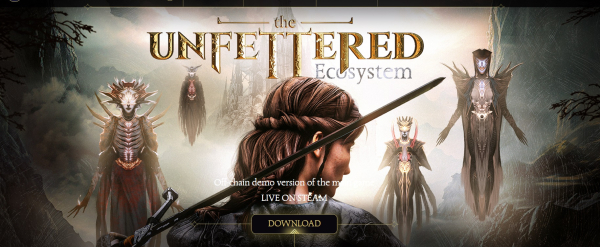
The Unfettered, First Story-Based AA Game to feature Play2Earn, NFT, and Metaverse, brings you the story of a lonely woman’s arduous journey to end years of Blood and Tears in the Age of Gods.
Th ...e desktop version is available for Windows PCs.
What is the story behind it? Show More
Founded in 2017, Chainlink is a blockchain abstraction layer that enables universally connected smart contracts. Through a decentralized oracle network, Chainlink allows blockchains to securely intera ...ct with external data feeds, events and payment methods, providing the critical off-chain information needed by complex smart contracts to become the dominant form of digital agreement.
The Chainlink Network is driven by a large open-source community of data providers, node operators, smart contract developers, researchers, security auditors and more. The company focuses on ensuring that decentralized participation is guaranteed for all node operators and users looking to contribute to the network.
To learn more about this project, check out our deep dive of Chainlink. Show More
Stargaze is a decentralized and community-owned network for NFTs. It is built as an app-specific Cosmos Proof-of_stake chain, running the Tendermint consensus engine. It’s goal is to be similar to O ...penSea, except governed by a community via a curation DAO and a protocol DAO Show More